Patios and paving
Porcelain, stone and concrete, laid to last
What goes under the slabs decides whether they stay flat. This is the long version of that, with the photographs to match.

What gets laid
Three materials, one build-up
Which one you pick is about how it looks in ten years, not just the week it goes down. All three are laid the same way underneath.
Pressed and fired, so it takes in very little water. Himalayan white is the one in most of the photographs here: pale, even, and slow to green over.
Sandstone and natural stone, cut and laid to the same falls. Warmer underfoot and every slab different, but some of it wants sealing every few years.
Concrete paving, plain or textured, for a straight, practical job. Same full bed underneath, same joints finished flush.
How it’s built
A patio is mostly the part you cannot see
The white slabs are the last two days of the job. What decides whether they stay flat is underneath: how far the ground was dug out, how the stone was compacted, and whether the mortar under each slab reaches its edges.
A large porcelain slab is stiff and unforgiving. Lay it on five dabs and the middle rings hollow, the corner cracks, and the first hard frost finishes the argument.
- FormationThe ground dug out to the finished level, less the depth of everything above it, then consolidated.
- MembraneA geotextile over the formation, so the stone does not work its way into soft ground.
- Sub-baseAround 100 mm of Type 1 stone, compacted in layers rather than tipped in one go.
- Mortar bedA full bed, mixed wet enough to key, laid to a fall that runs away from the house.
- Porcelain20 mm slab, bedded and tapped level with the one before it. No hollow corners.
- JointKiln-dried sand or a grout, finished flush with the surface and left to set.
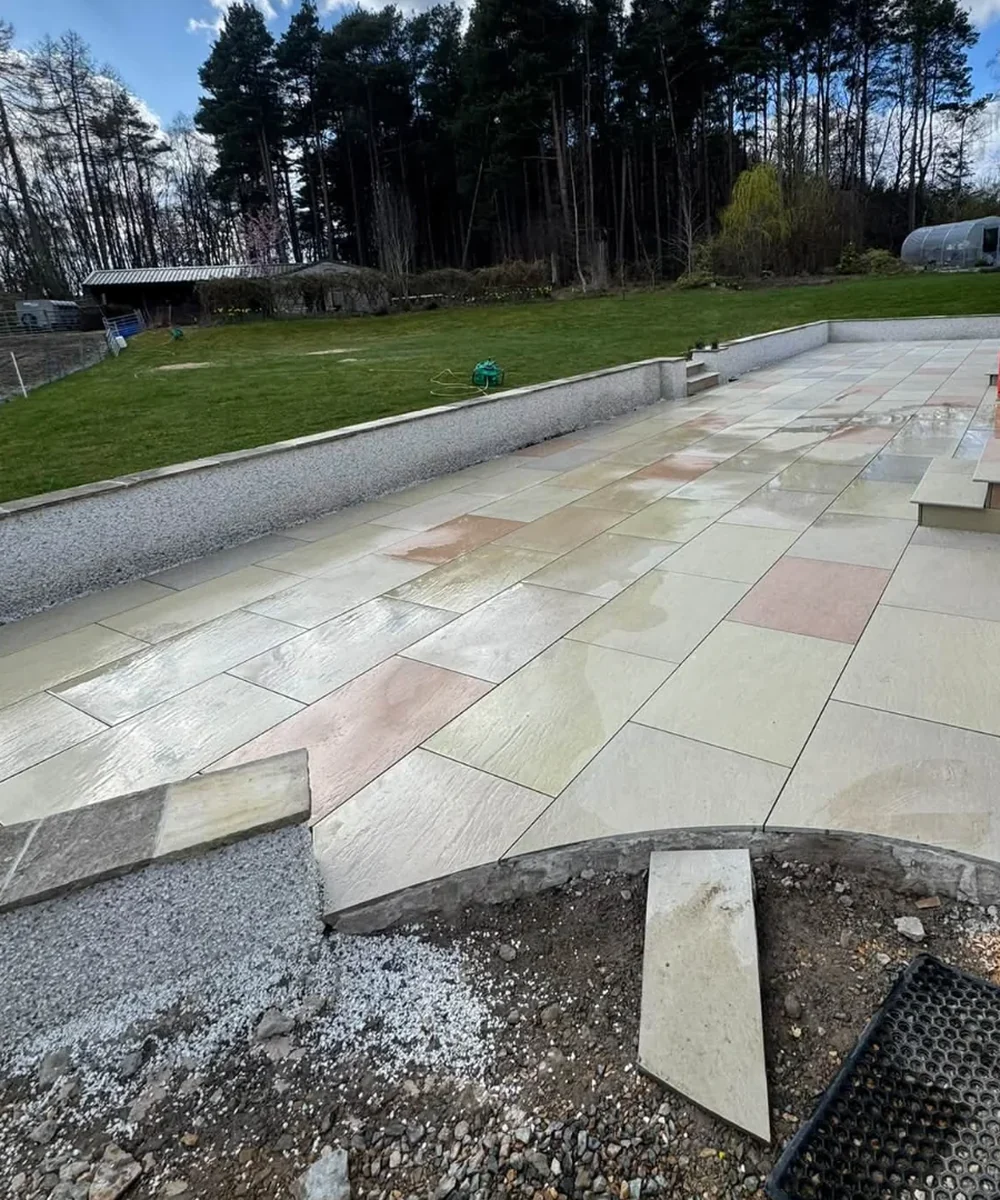
Fall 1:80, away from the house. The depths beside this are the usual ones; the ground decides the rest.
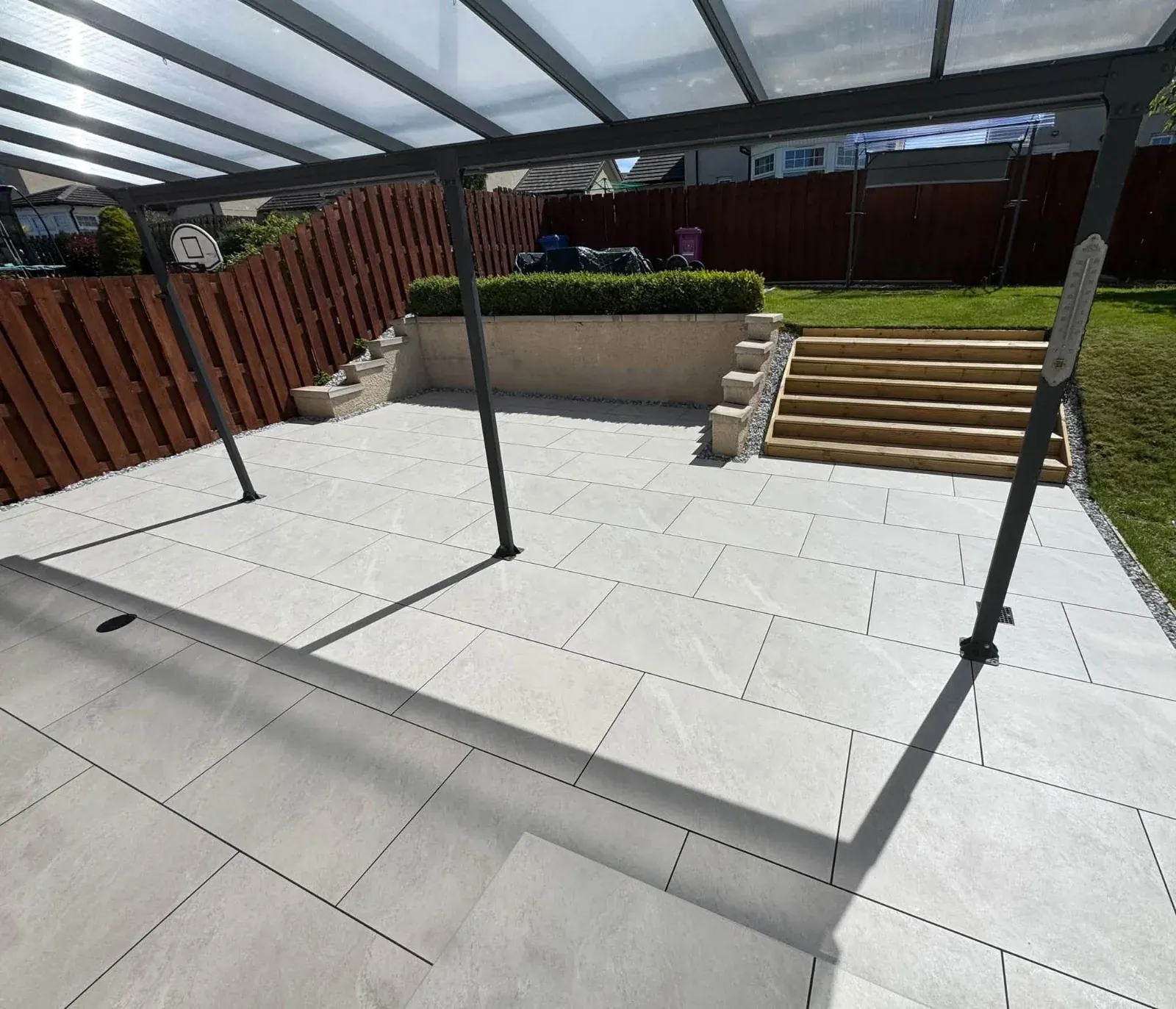
The paving
Why white porcelain, and why it needs a full bed
Porcelain is pressed and fired, so it takes in very little water. That is what keeps a pale patio pale: less moss in the joints, less green film on the surface, and no sealing every other spring the way some sandstone needs.
What it does not do is forgive a soft base. It is denser and heavier than stone, it chips rather than wears, and a slab that is not fully supported will crack along the joint it sits on. The white shows every bit of it.
So the slabs get a full bed and a checked fall, and the joints get finished properly. After that it is a sweep and the odd wash, and it looks like the day it went down.
The bits that show
Two places a patio is judged: the joint, and the step down to the lawn.

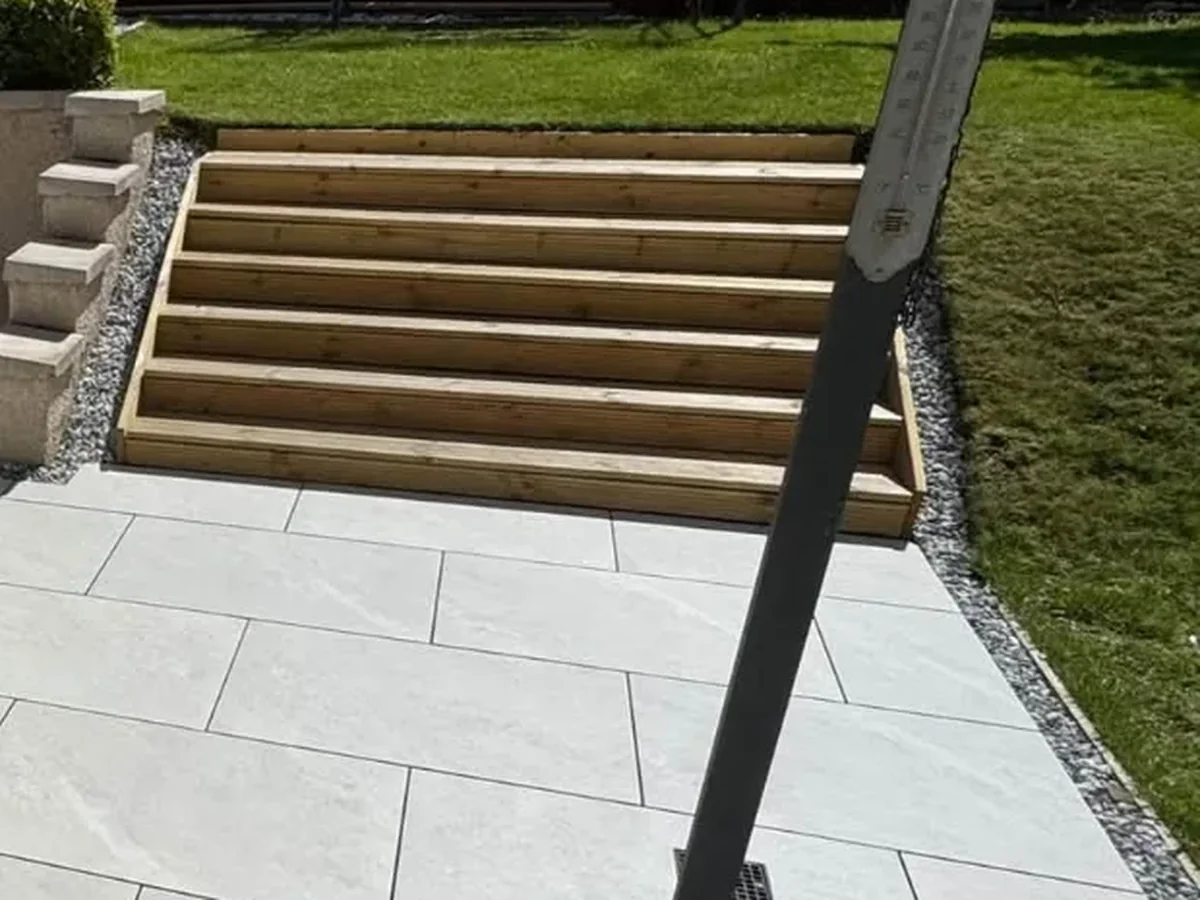
The rest of the finished jobs are on the our work page, or on the firm’s Facebook page.
Tell Trevor about the garden
Where it is, roughly how big the space is, and what is there now. A photograph from the back door is usually enough to work out whether it is a straight job or one that needs a look first.